КАТЕГОРИИ:
Архитектура-(3434)Астрономия-(809)Биология-(7483)Биотехнологии-(1457)Военное дело-(14632)Высокие технологии-(1363)География-(913)Геология-(1438)Государство-(451)Демография-(1065)Дом-(47672)Журналистика и СМИ-(912)Изобретательство-(14524)Иностранные языки-(4268)Информатика-(17799)Искусство-(1338)История-(13644)Компьютеры-(11121)Косметика-(55)Кулинария-(373)Культура-(8427)Лингвистика-(374)Литература-(1642)Маркетинг-(23702)Математика-(16968)Машиностроение-(1700)Медицина-(12668)Менеджмент-(24684)Механика-(15423)Науковедение-(506)Образование-(11852)Охрана труда-(3308)Педагогика-(5571)Полиграфия-(1312)Политика-(7869)Право-(5454)Приборостроение-(1369)Программирование-(2801)Производство-(97182)Промышленность-(8706)Психология-(18388)Религия-(3217)Связь-(10668)Сельское хозяйство-(299)Социология-(6455)Спорт-(42831)Строительство-(4793)Торговля-(5050)Транспорт-(2929)Туризм-(1568)Физика-(3942)Философия-(17015)Финансы-(26596)Химия-(22929)Экология-(12095)Экономика-(9961)Электроника-(8441)Электротехника-(4623)Энергетика-(12629)Юриспруденция-(1492)Ядерная техника-(1748)
Exercise 13. Use some nationality adjectives to make well-known collocations
Exercise 12. Match the adjectives from the word square with their transcription.
1. _____________ [‘beldc∂n] 2. _______________ [swis]
3. _____________ [,mo:l’ti:z] 4. _______________ [dлt∫]
5. _____________ [no:’wi: dc∂n] 6. _______________ [‘airi∫]
7. _____________ [‘lлks∂mb∂:g] 8. _______________ [‘swi:di∫]
9. _____________ [‘deini∫] 10. ______________ [‘sl∂uvæk]
11. ____________ [‘sipri∂t] 12. ______________ [‘iŋgli∫]
13. ____________ [kr∂u‘ei∫n] 14. ______________ [frent∫
15. ____________ [t∫ek] 16. ______________ [ais’lændik]
example: Polish hospitality
1. _________________ fries
2. _________________ pub
3. _________________ falcon
4. _________________ Air
5. _________________ wood
6. _________________ cookies
7. _________________ weather
Exercise 14. You are going to watch  Video transcript “Transport and Travel” (VT 1). Fill in the gaps with the following words. Use each word only once.
| City, city, come, embankment, fancy, fantastic, flat, food, friend, help, here, London Eye, lost, need, never, phone, plane, River Thames, sights, taxi, tickets, train, transport, trip, wanted, weather, weighs |
Stephen: There she is!
 Ashlie: Hi!
Stephen: Great to see you Ash – this is Jazz.
Ashlie: Hi, nice to meet you, Jazz.
Jazz: Nice to meet you Ashlie. I have never been … before. I have always … to visit London.
Ashlie: Wow, this is your first visit to London – you’ve never been here before? Well, I’m glad you could … – we’re really looking forward to showing you around.
Stephen: Come on. Let’s get going.
Ashlie: Here, let me … you with this bag. What have you got in here? It weighs a ton.
Stephen: Oh - come on. We … to get a move on.
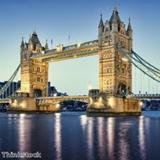 Ashlie: Stephen’s brought his … Jazz over to London for a few days. So we’re going to give him a tour of the … and show him the ….
Stephen: Come on Ash - we need to get to central London for your surprise.
Ashlie: Surprise? What for me? I’ve got a surprise!
.....
Stephen: Hi there.
Cab Driver: Hi.
Stephen: We need to get to the …. Can you take us to … – near the tube station?
Cab Driver: Embankment Station, OK.
Ashlie: Oh no! My bag! Where’s my bag? I can’t believe it… I’ve … it. I’m going to have to go back there and get it.
Stephen: Did you have it with you on the train? Are you sure you had it with you on the train?
Jazz: You had your bag on the train, definitely – you put it on the... err... How do you say that in English?
Stephen: The luggage rack – yeah. Did you put it on the luggage rack, Ash?
Ashlie: You’re right - I’m sure I had it with me on the train. Oh my gosh! My …! My phone is in my bag. Oh, I’m going to have to go back.
Stephen: But Ashlie, you’ll miss the surprise.
Ashlie: Oh, how annoying! You guys go on ahead and I’ll catch you up later.
Stephen: Are you sure?
Ashlie: Yes, don’t worry. I’ll give you a call later.
.....
Jazz: Do you know how many different types of … we have been on today?
Stephen: Well, we arrived on a …, and then took a …, then a … – and now we’re on a boat on the River Thames!
Jazz: Wow - amazing. I didn’t realise people in London travelled around on boats.
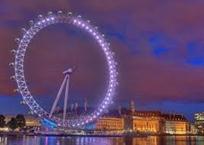 Stephen: Well, there’s a lot less traffic on the river and it’s a great way to see the sights.
......
Stephen: Ah - there’s Ashlie.
Ashlie: Hi guys. Ah, I’m glad to have these back.
Stephen: Well, here we are!
Jazz: Brilliant. Are we going to the …?
Stephen: We are and I’ve got our …!
Ashlie: Oh, what a great surprise, Stephen. I’ve always wanted to go on the London Eye!
Stephen: And the view of London from up there is amazing.
Ashlie: Oh, and the … is so good, we’ll be able to see loads.
Jazz: Oh, I can’t wait.
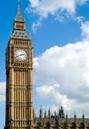
Stephen: There you go mate, the Houses of Parliament. There’s Big Ben. Over there is St Paul’s Cathedral.
 Jazz: What a view.
Ashlie: Wow this is amazing. The … looks great from up here.
Jazz: That’s a strange building. What is that?
Stephen: Oh, that’s what we call the Gherkin – is one of London’s famous office blocks.
Jazz: Cool. This is ….
Stephen: And there’s one thing we haven’t done today? Here’s something to remind you of your … to London.
Jazz: Oh, the London Underground. We haven’t been on the London Underground today. Thank you so much, Stephen. I’m never going to forget this day!
......
Ashlie: Let’s get some …, you guys must be hungry. What do you want to do? Shall we get a takeaway or eat in?
Jazz: Sorry? A take-away or eat in? What do you mean?
Ashlie: Eat in, when we eat in the restaurant or take-away, when we take the food home with us.
Jazz: OK. Let’s get take-away, shall we?
Ashlie: So what do you … then, Pizza?
Jazz: Pizza’s good.
Stephen: Yes, pizza sounds good. And I know a great place right near the ….
Ashlie: Oh no! You guys are never going to believe this… I’ve left my purse on the London eye!
2.
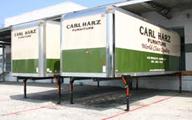 Exercise 15. Match the pictures of transport and handling equipment (a–f) with the words (1–6).
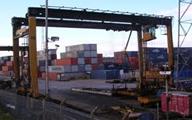
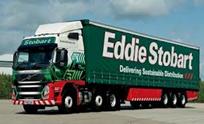
a ___________ b ____________ c ____________
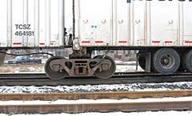
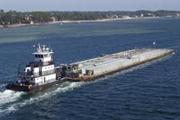
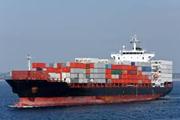 d ___________ e ____________ f _____________
1 swap-body
2 container ship
3 grapper lift
4 road-railer trailer
5 river barge
6 LGV (large goods vehicle)
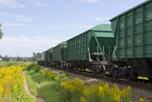
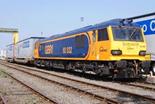 Exercise 16. Match the different types of freight traffic (1–6) with the definitions (a–f).
1 multimodal
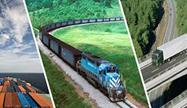 2 piggyback
3 intermodal
4 unaccompanied
5 block train
6 single-wagon
a The driver does not stay with his road vehicle during transport by rail or ferry.
b Goods are transported in the same loading unit or vehicle using different modes of transport. The handling of the freight itself is not necessary when changing modes.
c A single shipper uses a whole train which is run directly from the loading point to the destination. No assembling and disassembling is required.
d Carriage of goods by at least two different modes of transport, e.g. shipping by motor lorry and aircraft.
e Train is formed out of individual wagons or sets of wagons which have different origins and different destinations.
f Combines road and rail transport: whole motor lorries, trailers or swap-bodies are carried by rail.
 Exercise 17. Two employees of a forwarding company are comparing transport modes for a shipment from western China to Shanghai. Listen and correct the information in the table.
| inland waterways | road | rail (express service) | |
| speed in days | |||
| cost | low | compared with barge: 60% higher | compared with road: 40% higher |
| flexibility | high | very high | low |
 Exercise 18. Complete the sentences with the correct form of the words in brackets. Then listen again to check.
1. How long would it take by barge? – Normally about six days, but it often takes ________ (long) if the weather’s bad.
2. It’s cheap – it’s actually the _______ (cheap) of all the transport options.
3. It would only take four days to ship by truck, but the cost would be about 50% ________ (high) than by barge.
4. Rail would definitely be ________ (fast) than the truck option if we use the express service that takes three days.
5. But it would also be more _________ (expensive) than shipping by road – transport costs are about 40% higher.
6. And then perhaps we’d have to use the standard train, which is much __________ (slow).
MAKING COMPARISONS

|
| When comparing two or more things we use comparative adjectives. The comparative form is –er for short adjectives with one syllable, and two-syllable adjectives ending in –y. Transport by sea is cheaper than transport by air. Steel is heavier than paper. We use more + adjective with longer words. Shipping goods by road is more expensive than shipping them by rail. Some transport modes are more reliable than others. Some adjectives have irregular forms. good/well – better Our rates are better than theirs. bad/badly – worse Their service is worse than ours. far/further – furthest This shipment will travel further than the last one. |
|
|
Дата добавления: 2014-11-29; Просмотров: 1855; Нарушение авторских прав?; Мы поможем в написании вашей работы!