КАТЕГОРИИ:
Архитектура-(3434)Астрономия-(809)Биология-(7483)Биотехнологии-(1457)Военное дело-(14632)Высокие технологии-(1363)География-(913)Геология-(1438)Государство-(451)Демография-(1065)Дом-(47672)Журналистика и СМИ-(912)Изобретательство-(14524)Иностранные языки-(4268)Информатика-(17799)Искусство-(1338)История-(13644)Компьютеры-(11121)Косметика-(55)Кулинария-(373)Культура-(8427)Лингвистика-(374)Литература-(1642)Маркетинг-(23702)Математика-(16968)Машиностроение-(1700)Медицина-(12668)Менеджмент-(24684)Механика-(15423)Науковедение-(506)Образование-(11852)Охрана труда-(3308)Педагогика-(5571)Полиграфия-(1312)Политика-(7869)Право-(5454)Приборостроение-(1369)Программирование-(2801)Производство-(97182)Промышленность-(8706)Психология-(18388)Религия-(3217)Связь-(10668)Сельское хозяйство-(299)Социология-(6455)Спорт-(42831)Строительство-(4793)Торговля-(5050)Транспорт-(2929)Туризм-(1568)Физика-(3942)Философия-(17015)Финансы-(26596)Химия-(22929)Экология-(12095)Экономика-(9961)Электроника-(8441)Электротехника-(4623)Энергетика-(12629)Юриспруденция-(1492)Ядерная техника-(1748)
The terminals
|
|
|
|
Exercise 2. Read and translate the Basic text (ВТ).
Exercise 1. Remember Active vocabulary 4 and translate the following words.
III. Phrases to memorize.
| log on to the computer system | підключитися до комп’ютерної мережі |
| to be cancelled | бути скасованим |
| to be equipped with | бути обладнаним |
| to be provided with | бути забезпеченим |
| Some questions to answer when planning the work What is the terminal? ↓ What are three main functions of the terminal? ↓ What are peculiarities of warehousing today? |
1.
Transportation spending is a win-win proposition.
Tim Bishop
Правосторонній рух; лівосторонній рух; кордон; автомагістраль; шосе; тунель; година пік; дорожній рух; ламати старі правила і встановлювати нові; стара традиція; рух колісного транспорту; визначати напрям.
1. People and goods to be transported are referred to as traffic. Traffic must be provided with places where interchange between vehicles or different modes of transport can take place. These points of access and interchange are called terminals.
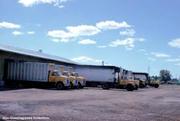 2. A terminal has three main functions:
1) to permit easy interchange between vehicles and on other modes of transport
2) to facilitate consolidation of traffic.
3. Terminals range in size from a simple roadside bus stop to the huge complex of a major port. Depending on the form of transport needed, the equipment and size of terminals may vary. The length of time a passenger is willing to remain in “store”, i.e. between vehicle departures, is shorter than the time that can be allowed between the dispatch of loads of goods on journeys of comparable distances.
4. Generally speaking, passengers are self-loading and self-discharging and capable of moving themselves from one mode of transport to another unless they are disabled. The transport operator needs to provide little assistance in loading and discharging. Moreover, passengers are capable of reading timetables and following instructions. If given a time and place and, where necessary, instructions detailing how to get there, passengers will present themselves, ready for transport. This relieves the operator from the task of collecting together the individuals that are to make up a vehicle load. Where interchange between vehicles and modes of transport is concerned, some time-lag is necessarily involved. The longer the journey, the longer the interval between vehicle departures that the passengers will tolerate. During these waiting periods, the transport operator or the terminal operator must provide certain services and facilities for the passenger. These services will vary according to the volume of traffic, the size of the carrying units, the length of journeys, the degree of comfort expected by the passengers, any special considerations peculiar to the mode of transport, and whether the journey is international or not. They will usually include seating, toilet accommodation and refreshment facilities.
 5. Goods, being inanimate, do not require the range of services necessary for the comfort and convenience of passengers, but present a different set of problems. It is essential to provide suitable mechanical handling appliances to facilitate the loading and unloading of vehicles, for sorting and for stacking and unstacking goods in the storage areas, and for transporting them around the terminal. Recent developments in computerization, e.g. SPARCS (Synchronous Planning and Real-time Control System), have transformed the work of terminals by enabling computer simulations of terminal procedure to be devised. Models of road vehicles, trains and ships can be built up within the computer to show where each container is at present, and its ultimate destination. The route of a vehicle through the terminal can then be planned to enable unloading to be done at the most appropriate point. Such sophisticated developments are highly desirable and give complete control of a container terminal.
|
|
|
|
|
Дата добавления: 2014-11-29; Просмотров: 831; Нарушение авторских прав?; Мы поможем в написании вашей работы!